The AI Bubble Isn’t Just Affecting Bitcoin, Even Stocks Are Floundering

Fears of a bubble that may soon burst seem to have transcended ecosystems, pouring cold water on what might have otherwise been a year-end rally.
The AI Bubble’s Wider Fallout: Stocks Join Bitcoin in Decline
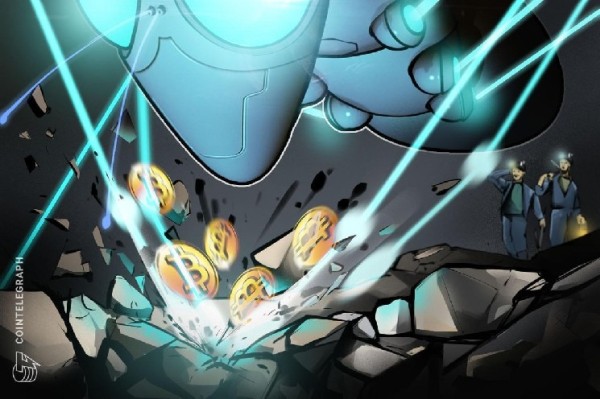
Nowadays, when the stock market sneezes, bitcoin catches a cold. That idiom partly explains the puzzling price action BTC has exhibited over the past eight weeks. Billions in institutional capital, favorable crypto legislation, and acceptance by several trillion-dollar money managers all failed to trigger a year-end rally for the cryptocurrency. And now stocks may meet a similar fate, with many blaming AI hype for the bearish retreat.
There are two predominant theories connecting the AI bubble to bitcoin’s price decline. One says investors are cycling out of the digital asset into hyped-up tech stocks such as Nvidia (Nasdaq: NVDA).
“ Bitcoin started the year as the hottest investment narrative,” said Alex Thorn, head of firmwide research at Galaxy, in a November note to clients. “But AI, hyperscalers, gold, and the Magnificent 7 have absorbed capital and attention that might otherwise flow into BTC.”
The other theory simply posits that concerns of an AI bubble on the verge of bursting have made investors retreat from risk-on assets such as bitcoin into stores of value like gold and silver, both of which are currently trading at near all-time highs.
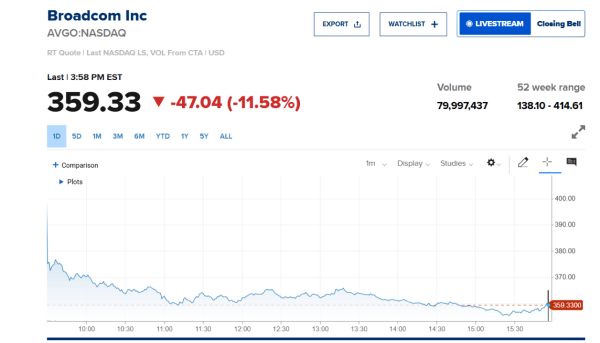
(Chipmaker Broadcom fell nearly 12% on Friday, despite beating revenue expectations just a day before. / CNBC)
But just as traders became wary of bitcoin eight weeks ago, perhaps due to a combination of the October 10-11 liquidation event and AI-driven overexuberance, investors are also starting to sour on AI stocks, even when those companies are doing everything right. California-based chipmaker Broadcom (Nasdaq: AVGO) announced its fourth-quarter results on Thursday, and they were stellar. The company blew past analysts’ expectations, raking in more than $18 billion for the quarter, up 28% from last year. Broadcom counts Google, Meta, Bytedance, and Anthropic among its biggest clients, and CEO Hock Tan expects the firm’s AI chip sales to double in Q1 2026. Yet despite such impressive financials, the company tumbled nearly 12% on Friday.
“Frankly, we aren’t sure what else one could desire as the company’s AI story continues to not only overdeliver but is doing it at an accelerating rate,” Bernstein analyst Stacy Rasgon wrote in a report, echoing the same sentiment bitcoin analysts have been expressing since October. “It seems that AI stock angst is continuing with Broadcom’s shares trading down,” Rasgon added.
Overview of Market Metrics
Bitcoin was trading at $90,308.12 at the time of reporting, down 2.33% over 24 hours but up 0.93% for the week, Coinmarketcap data shows. The digital asset’s price has been fluctuating between $89,532.60 and $93,554.27 since Thursday afternoon.
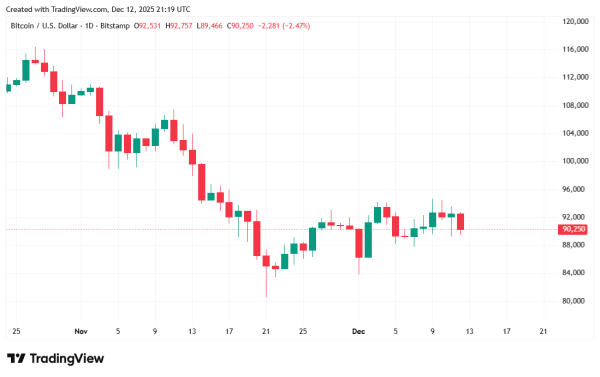
( BTC price / Trading View)
Daily trading volume climbed 34.61% to $82.08 billion, but market capitalization fell to $1.8 trillion. Bitcoin dominance remained flat over 24 hours at 59.43%.
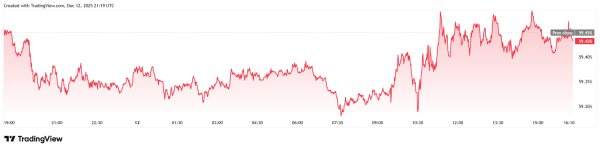
( BTC dominance / Trading View)
Total bitcoin futures open interest edged lower, dipping 1.61% to reach $59.12 billion, according to Coinglass data. Friday’s liquidations fell to $101.88 million, a figure mostly consisting of losses from long investors who saw $77.85 million in liquidated margin. The $24.03 million remainder represents liquidations from bearish short sellers.
FAQ ⚡
- Why are bitcoin and stocks both struggling right now?
Investors fear the AI trade may be overextended, prompting a pullback from risk-on assets like bitcoin and tech stocks. - How is the AI bubble linked to bitcoin’s recent weakness?
Some capital rotated from BTC into AI stocks earlier, while broader bubble fears are now driving risk aversion across markets. - Why are strong AI companies still seeing their shares fall?
Even stellar earnings, like Broadcom’s, aren’t enough when sentiment turns against crowded AI trades. - Does this mean a year-end rally is off the table?
Rising caution around AI and macro uncertainty have poured cold water on what might have been a late-year rebound.












Post Comment